Abeyon
  • About Abeyon
    • Who we are
    • Customers
    • Vehicles
  • Capabilities
    • Secure AI solutions
    • Data Engineering & Analysis
    • IT Modernization & Digital Transformation
    • Application Development
  • AI Studio
  • Case Studies
  • Insights
  • Join
  • Contact
  • Menu Menu

Design Based Development Requires A New Approach

List List Menu
  • Top
  • Experience
  • Solutions
  • Our Process
  • SCRUM Development

Transfer Learning

June 13, 2019/in AI, Deep Learning, Machine Learning/by Mallesh Murugesan

Transfer learning is a machine learning method where a model developed for a task is reused as the starting point for a model on a second task.

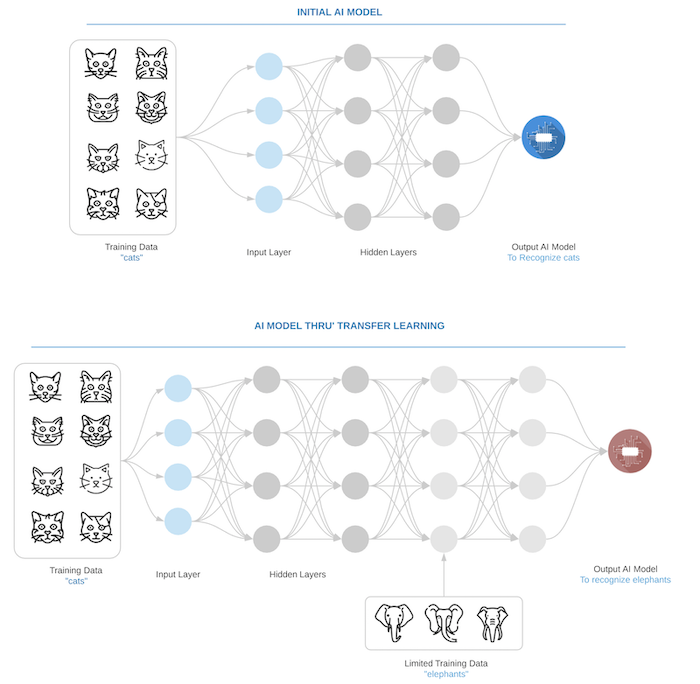
In transfer learning, we leverage prior knowledge from one domain into a different domain. The way transfer learning is done is by deleting the last output layer and creating a new set neural network layers for the new problem. Then these layers are trained using the new data set.

For example, let’s say you have an AI model to recognize cats, now we can use that knowledge to recognize elephants. The model for recognizing cats is created by training the model with pictures of cats (plenty on the internet). Once the model is trained to recognize cats with high accuracy, then the last layer of the neural network will be replaced with additional layers and those layers will be trained using pictures of elephants to recognize elephants. This is done so that a lot of the low-level features like detecting edges, curves, etc. could be learned from the large dataset (in this case Cats) and the newer model will be trained to recognize specific elements (elephants specific features) with fewer data as shown in the below figure.
Most of the success today in achieving high accuracy in AI models has been driven by extensive supervised learning which relies on large amounts of labeled datasets. For simple use cases, large amounts of labeled public data is available through various online sources (Ex: ImageNet, WordNet, etc.) but if you are building a model for a specific domain solution, large amounts of labeled data is hard to obtain or data will need to be cleaned and labeled manually for building the model. Transfer learning enables you to develop fairly accurate models using comparatively little data. This is very useful at enterprises that might not have a lot of clean labeled data.

Therefore on some problems where you may not have very much data, transfer learning will enable you to develop skillful models that you simply could not develop in the absence of transfer learning.


https://abeyon.com/wp-content/uploads/2019/06/ML_AI.jpg 500 1000 Mallesh Murugesan https://abeyon.com/wp-content/uploads/2015/03/logo_abeyon_big-gray-300x85.png Mallesh Murugesan2019-06-13 10:31:442019-06-13 10:31:44Transfer Learning
Intelligent Process Automation

Knowledge Integration in AI

May 23, 2019/in AI, Deep Learning, Machine Learning/by Mallesh Murugesan

So let’s think about how humans learn, we humans are very good at continuously enriching and refining our knowledge and skills by seamlessly combining existing knowledge with new experiences. We exhibit a wide spectrum of learning abilities in various fields. We can be lawyers during the day and go play tennis or go for a run in the evening and make dinner at night. We are fairly adept at doing multiple tasks. When you think about AI systems, that is usually not the case. AI systems are very good at doing a specific task through machine learning alternatively called Narrow Intelligence.

Despite recent breakthroughs and advances, machine learning has a number of shortcomings when it comes to obtaining knowledge in various fields and in developing methods to identify how new and prior knowledge interact to gain more insights. Knowledge integration is the process of synthesizing multiple knowledge representations into a common model. It represents the process of how new information and existing information interact, what effects will the new information will have on existing knowledge and if existing information needs to be modified to accommodate new information.

Why is this concept important? It is important for building a better machine learning model for enterprise knowledge insights.  Not all knowledge will be readily available or can be fed into the machine learning model at once. Substantial knowledge bases are developed incrementally and a growing body of knowledge will need to be added separately. By identifying subtle conflicts and gaps in knowledge, KI facilitates better learning models. Large firms like Google are using a combination of Symbolic AI, Deep learning and Supervised learning to create better knowledge understanding and knowledge reasoning.

If you are an organization looking to extract valuable information and identify patterns within your data to create efficiency, these concepts are critical and I highly recommend doing further research around these to achieving success.

https://abeyon.com/wp-content/uploads/2019/05/AI-Network.jpg 394 860 Mallesh Murugesan https://abeyon.com/wp-content/uploads/2015/03/logo_abeyon_big-gray-300x85.png Mallesh Murugesan2019-05-23 09:30:182019-05-23 09:30:18Knowledge Integration in AI

What is NLS?

April 24, 2019/in AI, NLP/by Mallesh Murugesan

NLS: Natural Language Search is a search using everyday spoken language, such as English. Using this type of search, you can ask a database a question or type in a descriptive sentence that describes your question.

Though asking questions in a more natural way (ex: What is the population of England as of 2018? Or who was the 44th president of America?) has only recently come into its own in the field, natural language search engines have been around almost as long as web search.

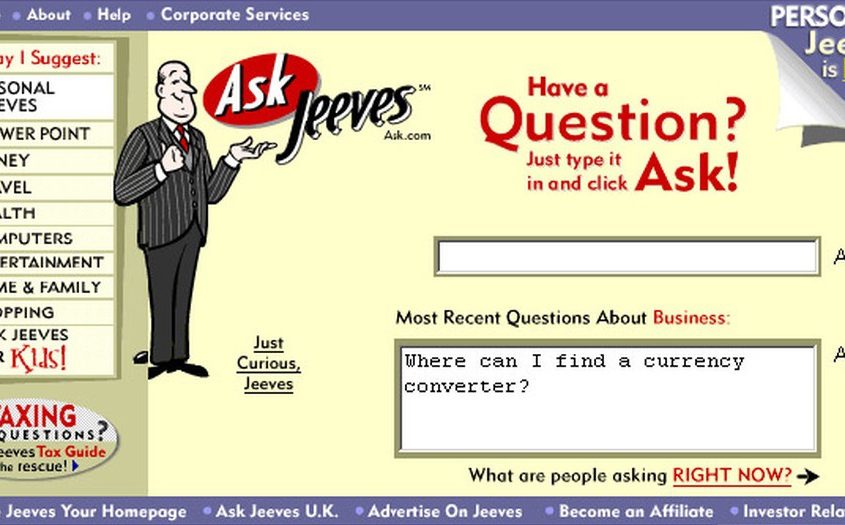
Remember Ask Jeeves? The 1996 search engine encouraged its users to phrase their search queries in the form of a question, to be “answered” by a virtual suited butler. Ask Jeeves was actually ahead of its time in this regard when other search engines like Google and Yahoo were having greater success with keyword-based search. In 2010, Ask Jeeves finally bowed to the pressure from its competition and outsourced its search technology. Ironically, had Ask Jeeves been founded about fifteen years later, it most likely would have been at the cutting edge of natural language search, ahead of the very search engines that squeezed it out.

Ask jeeves

Today the advent of smart speakers and mobile phones has brought voice-based search and conversational search to the forefront. Advances in NLP (Natural Language Processing) technology has made this possible not just for search giants like Google and Microsoft but also for enterprises to search their internal knowledge base and domain data utilizing artificial intelligence (AI).

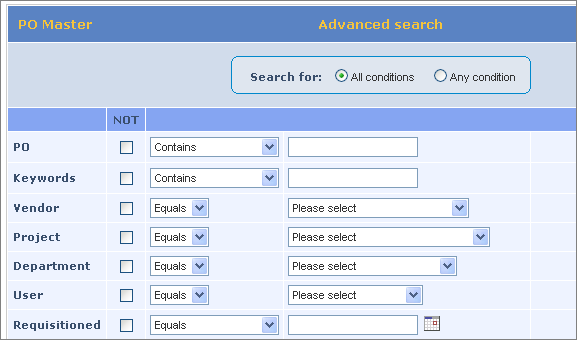
Anyone who has used an enterprise application will be familiar with multiple criteria search boxes (like below).

NLS

These searches are cumbersome and perform search on structured data stored in the database. As more and more data are now being stored in NOSQL databases and in unstructured text across documents and folders, the need for search across these data sources becomes essential. A simple Boolean search (a simple search for keywords) does not provide the extensive search capabilities necessary to review complex relationships between topics, issues, new terms, and languages. It’s 2019 – searches need to, and can, go beyond simple keyword matching.

An effective search will need to include indexed data that is extracted from a knowledge base using AI technologies like NER (Named Entity Recognition), OpenIE (Information Extraction), key phrase extraction, Text classification, STS (Semantic Text Similarity) and Text Clustering. The data extracted from the above processes will need to be classified, indexed and stored using a multi-label classification technology. This classification methodology will populate the database with knowledge, links, and relations between all data sources. Data, along with structured data stored through transactional operations, will then be used to train the AI models in understanding entities, relations, and common phrases. And that’s where natural language search comes in. NLS provides an efficient way to search data stored in structured or unstructured formats (like scanned pdf documents etc.) thereby providing a comprehensive search across all data.

You can think about it like this: Take a query from an engineer like “Show me Oil Leaks on Main Engine for TAO class in the last 2 years.” The ships that belong to a specific class are stored in a structured database where specific oil leak failures are in repair text as unstructured information. Using AI models to extract this information and index it will provide the ability to answer this query with much more accuracy and greater speed – digging through documents is not going to be the best use of your time. In this case, the query will be analyzed by the model to identify entities that fit the query and dynamically build a solution query to retrieve information from the appropriate data store.

Artificial intelligence has enabled the possibility of implementing NLS within enterprises. This will increase the efficiency and effectiveness of search while reducing the time to perform searches.

https://abeyon.com/wp-content/uploads/2019/04/Fotolia_95509194_S.jpg 400 740 Mallesh Murugesan https://abeyon.com/wp-content/uploads/2015/03/logo_abeyon_big-gray-300x85.png Mallesh Murugesan2019-04-24 09:21:132019-04-24 09:21:13What is NLS?
Page 4 of 9«‹23456›»

Every organization faces a unique set of challenges and opportunities

That’s why, we design our solutions by listening to our clients and keeping design in every step of our process.

OUR PROCESS

Search Search

Categories

  • AI
  • Deep Learning
  • Events
  • In The News
  • Machine Learning
  • NLP
  • Text Analysis

Sign Up For Our Mailing List

Archives

  • February 2025
  • February 2024
  • May 2023
  • April 2022
  • May 2021
  • November 2020
  • November 2019
  • September 2019
  • August 2019
  • June 2019
  • May 2019
  • April 2019
  • March 2019
  • February 2019
  • January 2019
  • November 2018
  • February 2018
  • October 2017
  • September 2017
  • August 2017
  • July 2017
  • November 2016
© Copyright 2018 - Abeyon
  • CY 2024 Greenhouse Gas Emissions
Scroll to top Scroll to top Scroll to top